The Great Barrier Reef in Australia stands as a testament to the awe-inspiring biodiversity that exists beneath its surface, earning its place as one of the world's seven wonders. Explore this magnificent ecosystem and discover its top diving spots, idyllic islands, luxurious hotels, and breathtaking destinations.

Exploring the Great Barrier Reef, whether by snorkeling, diving, or taking a scenic flight, offers a unique glimpse into a world of marvels. As you soar 150 metres above, you'll witness the captivating sight of a manta ray gracefully navigating through a sea of delicate, pale coral, reminding you of nature's awe-inspiring indifference. However, to truly immerse oneself in this remarkable environment, a descent into its depths is necessary.
Preparing for an underwater adventure involves attending to the meticulous details of scuba gear, ensuring pressure and buoyancy are balanced. Once you kneel on the white sand, encircled by the sea's serenity at a depth of 10 metres, or gently drift along with the current, life emerges from the tranquil silence. This underwater realm thrives with ceaseless activity. Witness a mesmerizing spectacle as a shoal of yellow-tailed fusiliers gracefully dance, reminiscent of an Alexander Calder mobile. Experience the playful antics of a clownfish, engrossed in a thrilling game of hide-and-seek amongst the fronds of its host anemone.
Every movement sets the stage for a captivating performance. As you shift your position, you observe 20 exquisite violet- and chocolate-lipped clams, responding to your presence, closing in perfect harmony like noiseless cymbals in an orchestra. A further shift reveals the sudden retreat of 50 brilliant Christmas-tree worms, effortlessly vanishing into the safety of their burrows within the boulder coral. This lively spectacle reflects the extraordinary self-sufficiency of the reef's residents, each carrying out their daily activities of shopping, dining, visiting, and mating within their unique domains - vibrant villages and districts, sturdy pillars and tables, mesmerizing circuses, and thriving gardens and meadows, showcasing the diversity of life on coral canvases.
Discovering the Great Barrier Reef is an invitation to witness the remarkable autonomy and intricate beauty that flourishes beneath the waves.
Lizard Island, with its rugged beauty and stunning coastal views, offers a captivating experience that immerses visitors in the vibrant colors of the sea and sky. As we ventured an hour east of Lizard Island on the mesmerizing boat Serranidae, the meeting point of the Great Barrier Reef and the deep blue Pacific Ocean unveiled a breathtaking display of mint-aquamarine shallows, where the foaming swells resembled the fierce teeth of a shark.
With its pristine beaches and diverse marine life, Lizard Island is a haven for diving enthusiasts and nature lovers alike. The location boasts an awe-inspiring coral reef system teeming with a kaleidoscope of marine species, providing an unforgettable underwater adventure in crystal-clear waters. Whether you are an experienced diver or a first-time snorkeler, exploring the mesmerizing depths and sheer beauty of Lizard Island's aquatic wonders is an absolute must-do.
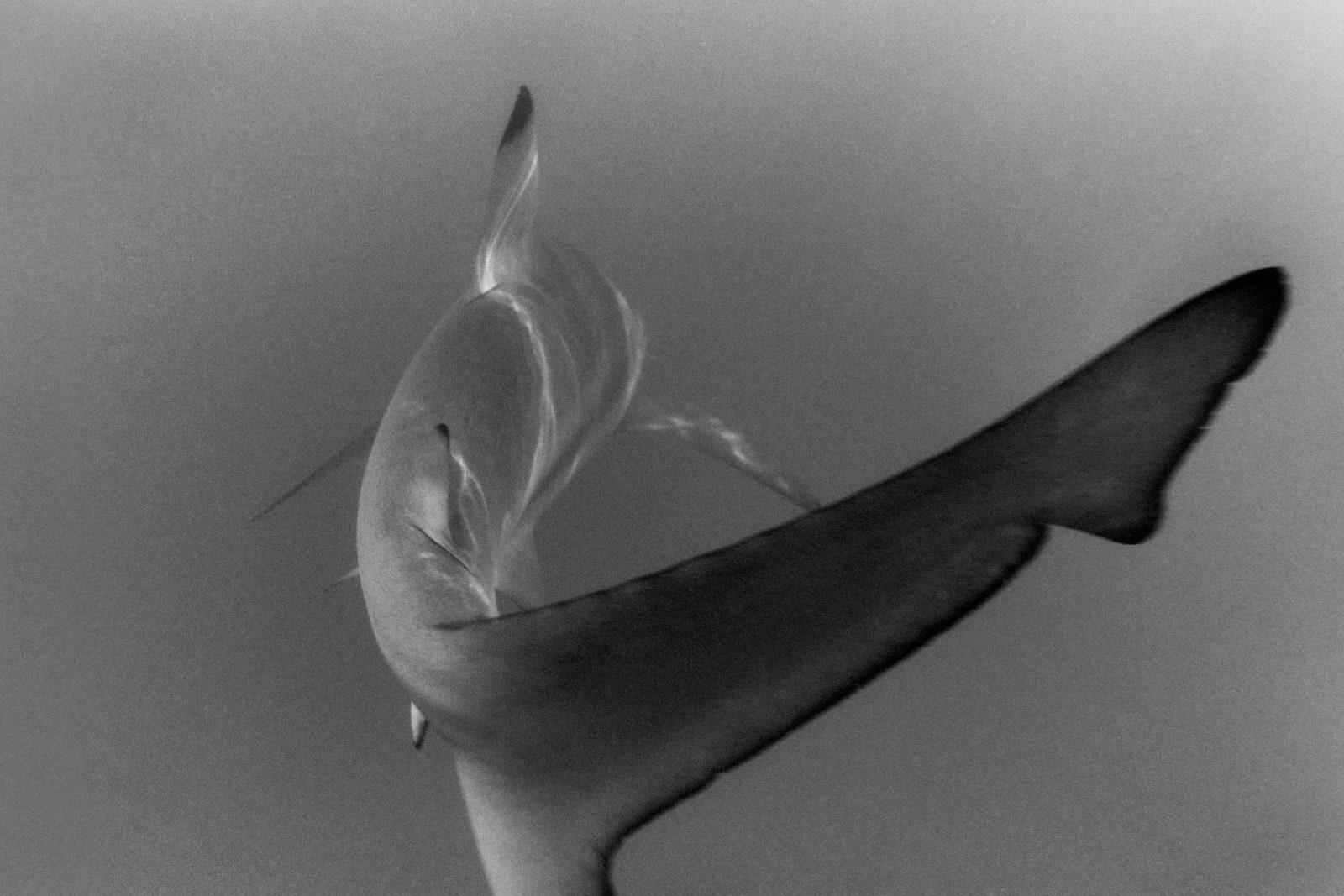
A blacktip reef shark at Bramble Reef, near Orpheus Island

Growing up in Brisbane, I'd spent my earliest holidays on the Reef. It seems incredible that through the 1960s and 1970s oil, mining and political interests were intent on drilling and blasting it for petroleum, gas and fertiliser for the Queensland canefields. Then, around the time Jean Shrimpton scandalised Australia by appearing at the Melbourne Cup in a white mini-dress without hat or gloves, a few activists started campaigning.
It took 15 years to get the Reef designated a marine park. World Heritage-listed in 1981 as 'the most impressive marine area in the world', it is now known to possess 580 species of coral, more than 1,500 species of fish, six of the seven turtle species on the planet, and its value is understood differently: as a phenomenally rich ecosystem in which coral polyps - organisms like tiny upside-down jellyfish - and zooxanthellae algae live in symbiosis. Algae provide oxygen and energy, coral a safe habitat and carbon dioxide for photosynthesis. Reefs are the rainforests of the seas, and - vitally, for humans - healthy reef corals absorb carbon at nearly twice the rate a rainforest can.

Whitehaven Beach in the Whitsunday Islands, Australia
In shallows suddenly mint-aquamarine the foaming swell is shark's-tooth white
Every discovery we make discovers something in us. Mine, as I travelled the extent of the Reef - approximately the length of Italy, an area of 350,000 square kilometres - was that entering its unsignposted territory connected me to the most mysterious place I have known, in which I could only rely on my senses. This, I think, is precious. It's as life should be.
From Orpheus Island, 640km south of Lizard, I dived Bramble Reef, a perfect reef-as-city, with coral tables like city blocks and gullies that open out into sandy squares. Slashes of pastels, lumpy as clay or fragile as lace, give way to a coral Soho of blues, pinks, neon yellows and purples, bustling with startling crowds and shameless individualists: painted sweetlips, six-banded angelfish, long-beaked coralfish, scarlet-breasted Maori wrasse, a timid baby moray eel, a starfish of Yves Klein blue. Black-tip reef sharks steal past in the foggy distance.

Flying from Cairns over the Reef
In the Whitsunday Islands, at the Reef's southern end, the gleaming One&Only Hayman Island - a world away from the gum trees and beach huts I visited as a boy - offered a moment of ethereal beauty when its helicopter deposited me, like a butterfly alighting, on the 98-per-cent-silica sand of Whitehaven Beach, sand that boggles the senses with its whiteness and coolness underfoot and its furling, filigree arabesques in the shallow currents.
Few disagree that the world's coral reefs are, in terms of climate change and our survival, the canary in the coalmine. Yet for every scientist who says that the Great Barrier Reef is threatened with irreversible decline, another describes a Reef that will adapt, one that has died and come to life again at least five times before, its sublime palette of sulphur, lilac, cream, violet, magenta, lime and tourmaline reviving and blooming again.

As I ventured through the remarkable city of Townsville, I made a stop at Reef HQ. This captivating destination combines an aquarium with research and outreach efforts, providing visitors like me with a unique opportunity to witness the wonders of the Great Barrier Reef. The charismatic director, Fred Nucifora, graciously guided me to a turtle-rehabilitation area, where incredible scenes of compassion unfolded before our eyes. In the presence of numerous visitors, we watched as people expressed genuine empathy for these majestic creatures, many of which had fallen victim to the detrimental effects of plastic bags, hooks, and fishing lines. Nucifora emphasized a profound truth: our efforts here extend beyond rehabilitating turtles; we are ultimately rehabilitating ourselves.
These sentiments shed light on the current state of the Great Barrier Reef – a delicate ecosystem that simultaneously faces decline and recovery. It is crucial to recognize that the convergence of these contrasting realities hinges upon the Reef's remarkable ability to recuperate, surpassing the challenges posed by warming seas and overdevelopment. For now, this magnificent natural wonder remains a testament to unimaginable beauty. Let us safeguard its awe-inspiring allure and ensure that it continues to thrive for generations to come.

Looking skywards through the photographer's air bubbles
Drift on the current and wait for life to materialise in the perfect silence
WHERE TO STAY ON THE GREAT BARRIER REEF
Lizard Island
Two hundred kilometres north of Cairns, this is accessible only by private charter. The shocked, defoliated look of the island's granite hills is the result of two recent back-to-back cyclones - a fact of life at this latitude. But the storms also provided a chance to rebuild the island's hotel in an elegant, almost puritanical-looking line of minimalist white-clapboard and zinc-roofed villas, among the thinned-out palms and paperbark trees. The effect is one of old-fashioned freshness, and it lets the raw blues that lap the island's humpbacked rocks and beaches enhance the incredible vistas of sea and sky. Often an asset of remote island hotels is their attention to foodie detail, and Lizard Island's Salt Water restaurant is no exception: Blackman Bay oysters, red-claw yabbies with wasabi avocado, Black Angus eye fillet in sea-urchin butter, along with equally extraordinary Pinot Noir and Shiraz from Victoria and South Australia respectively. The diving, particularly at Cod Hole, is excellent, and the Lizard Island Research Station is one of the world's leading reef-research facilities - the hotel can arrange visits. Despite their alarming appearance, the yellow-spotted monitors, which inspired Captain Cook when he named the island in 1770, are not to be feared - they are polite and discreet to the point of timidity.
Website: lizardisland.com.au
Price: Doubles from about £910

Bramble Reef near Orpheus Island
Orpheus Island
A chopper hop out of Townsville, there's been a hotel hidden away here since the 1950s. Its pedigree is obvious as you step from the helipad onto a wide, colonial-era lawn, perfect for garden parties, and walk towards a night-blue-tiled swimming pool, pantiled bungalows and a panoramic open lounge and restaurant decorated with rustic plasterwork. Orpheus is for the happy few, as perhaps only a handful of hotels really are, dedicated to making you content to forget that anything else exists or matters - one of those places where what Martha Gellhorn called 'the kitchen of life' disappears. Formerly owned by people in the entertainment industry - Vivien Leigh stayed here - it was bought in 2011 by Chris Morris, a tech millionaire, who rebuilt it 'basically for family and friends'. Twenty-eight staff look after a maximum of 28 guests, none of the rooms has a key and the atmosphere is as unforced as the service is seamless. Jen, the island's gardener for 16 years, has 50 hens that she massages every day and a vegetable garden conjured from desert-island sand. She likes to have green coconuts for the guests, and Arie, the chef, produces omelettes of miraculous sweetness from her hens' eggs. The diving is exceptional: its principal dive sites are home to 1,100 of the Reef's 1,500 fish species.
Website: orpheus.com.au
Price: Doubles from about £750

A turtle's-eye view under the surface
One&Only Hayman Island
At the northern tip of the Whitsunday Islands, this is a sleek retreat on a grand scale. Recently and lavishly refurbished at a cost of £40 million, it's cradled in a lovingly maintained rainforest landscape, and slickly supplies all needs - to the point where the temptation simply to stay put may become difficult to resist. But of course there are many exciting and exotic reef-oriented activities, including helicopter tours of the Outer Reef and motorised snorkelling with electric Seabobs. Signature spa treatments await even those weary reef explorers who choose to let the Seabobs do their paddling for them. (The Ocean Dreaming therapy is actually conducted on a floating table in the sea. Appointment times are dictated by the tides.) Rooms are airy and bright, with accents of shiny chrome and pale oak amid great tumbles of muslin and translucent white linen, at once contemporary and retro-chic. The vibe at the Chef's Table, one of six restaurants, might mislead you into thinking that your Martini has teleported you to New York. Better still, inhabit the present by taking your drink on the beach, with the Coral Sea at your feet and, as every good bar in the tropics faces west, the sun slipping away behind your toes.
Website: oneandonlyresorts.com
Price: Doubles from about £450
DIVING ON THE GREAT BARRIER REEF
With some two million visitors to the Reef each year, the diving scene is thriving. Options for beginners are many: one of the friendliest is the Cairns Dive Centre (cairnsdive.com.au), which offers the standard four-day PADI Open Water course for a reasonable price (about £300) in the company of professional and likeable instructors. Because most of the Reef is a marine-park area, operators must be accredited and adhere to strict environmental standards. Diving is almost always better in the north, where the water's clearer, because it's less rich in nutrients, and better in the Australian winter and spring.
Austravel (+44 800 988 4834; austravel.com) offers 10-day trips to the Great Barrier Reef from £2,249 per person, including flights, transfers, excursions and stays at Lizard Island, Orpheus Island and One&Only Hayman Island. For more information on the Great Barrier Reef, visit queensland.com
