Hallasan National Park on Jeju, South Korea
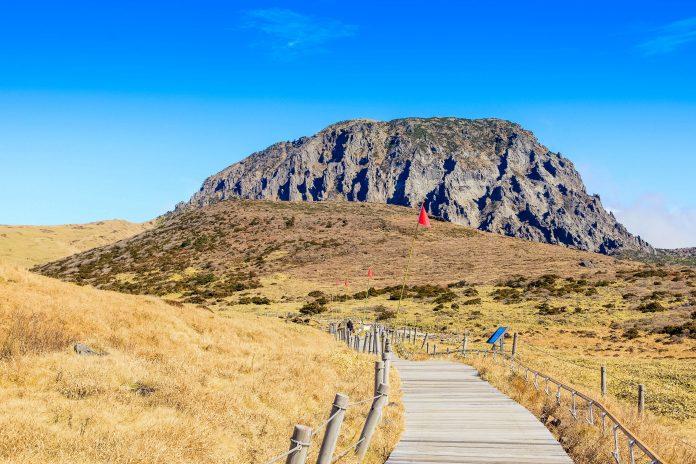
Hallasan National Park on Jeju Island in the south of South Korea stretches around Hallasan, the country's highest mountain. Six excellently signposted and paved hiking trails lead visitors through breathtaking plant life and up to the highest point in South Korea, the crater lake Baengnokdam.
Hallasan National Park on Jeju Island in the south of South Korea was established in 1970. It includes the Halla shield volcano, the highest mountain in South Korea, was designated a UNESCO Biosphere Reserve in 2002 and added to the World Heritage List in 2007.
Hallasan National Park is the only one of South Korea's 20 national parks that is not administered by the Korea National Park Service, but by Jeju Province. It is located directly in the centre of the beautiful island of Jeju and covers an area of almost 160,000 km2. The national park and Jeju Island can be reached by plane (national and international) and by boat from the South Korean mainland (Busan, Incheon and Mokpo).
Table of contents
Highest mountain in South Korea
The star of the national park is of course Hallasan itself. At a height of 1,950 metres, it is the highest elevation on Jeju Island and can be seen from any point on the island. Many even think that the mighty Hallasan IS Jeju Island. Because it can be climbed easily from all sides, it is one of the most popular hiking mountains in South Korea. The main crater of Hallasan measures over 400 metres in diameter, and there are numerous other secondary craters on the flanks of the volcano.
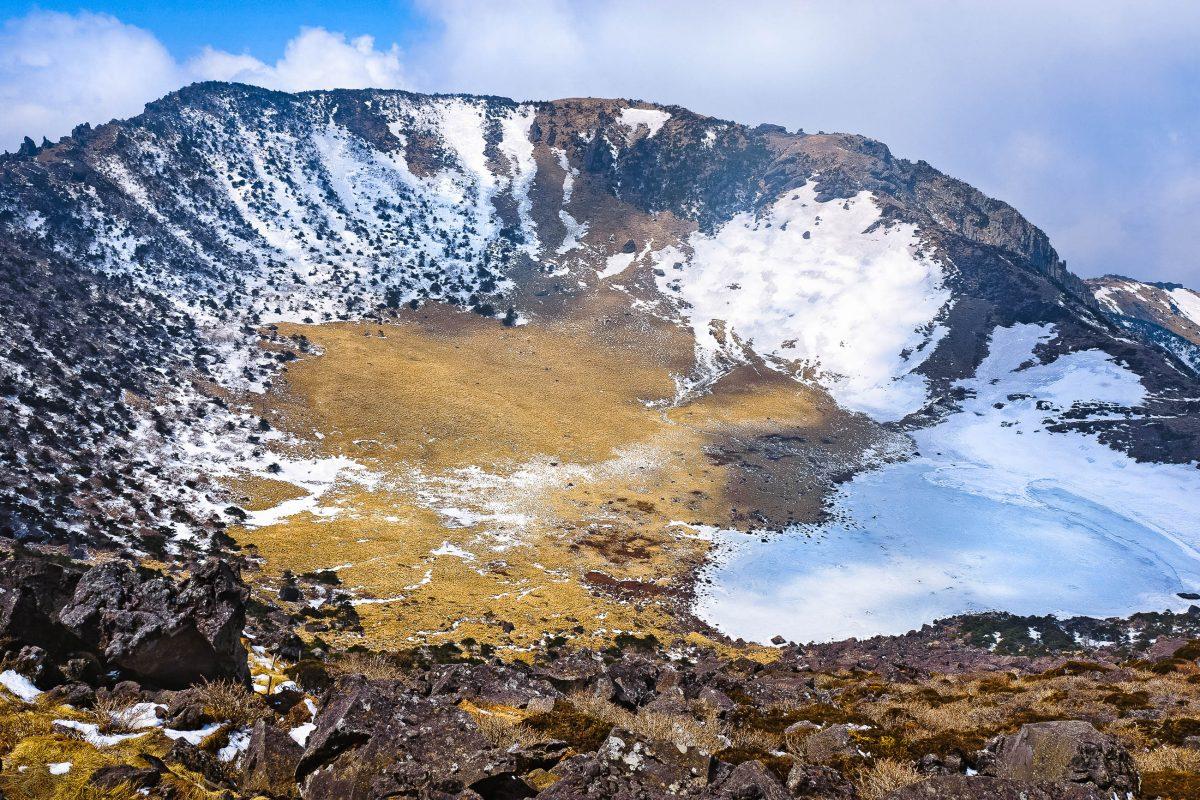
Discover the captivating beauty of Hallasan National Park on Jeju Island, South Korea. One of the highlights of this stunning park is the breathtaking crater lake, Baengnokdam. This cobalt-blue lake, which reaches an impressive depth of 100m, remains a remarkable sight throughout the year. In winter, it freezes over completely, adding a touch of enchantment to the already mesmerizing landscape. Experience the wonder of this natural marvel as you circumnavigate the lake over a distance of 2km.
Exploring Hallasan's Hiking Trails
Hallasan offers a selection of six meticulously marked and well-paved hiking trails, catering to varying levels of difficulty and time commitments. Each trail provides a unique adventure amidst the splendid volcano scenery. Regardless of your hiking experience, these trails are accessible to all, with steps provided to ease any strenuous climbs.
Embark on the Eorimok Trail, spanning just under 7km in length and featuring a gradual ascent of 600 meters. This trail, which takes approximately three hours in one direction, commences at the visitor center of the national park and leads to the southern cliff of Jeju. The picturesque Donnaeko Trail also starts from the visitor center and heads towards the southern cliff, offering a slightly longer route compared to the Eorimok Trail.
If you prefer a shorter yet equally rewarding hike, the Yeongsil Trail is an excellent choice. Stretching for approximately 6km, this trail involves a climb of 600 meters with the help of numerous steps. Starting from the Yeongsil Management Office, it leads hikers to the southern cliff of Jeju, just 15 minutes longer than the Eorimok Trail.
The Seongpanak Trail is just under 10km long and takes about 4.5 hours from the visitor centre to the Hallasan Baengnokdam peak and the crater lake of the same name. Shortly before the summit, the trail leads over relatively steep stone and wooden steps and can be quite strenuous. There are always checkpoints; if you reach one of them after a certain time, you will not be allowed to continue to the summit for safety reasons and will have to turn back. It is best to start the hike early in the morning.
The Gwaneumsa Trail is just under 8km long and leads from the Gwaneumsa campsite to the Hallasan Baengnokdam peak and the crater lake of the same name. At 5 hours, the route takes a little more time than the Seongpanapk Trail. By the way, Gwaneumsa is the oldest Buddhist temple on Jeju.
The Seokgulam Trail and the Eoseungsaengak Trail are short trails, each just over a kilometre long and can be completed in a good half hour. The latter leads from the visitor centre to the Eoseungsaeng-oreum peak.
Get ready to embark on a captivating journey through the mesmerizing Hallasan National Park on Jeju Island, South Korea. With its diverse range of flora, the park boasts an impressive collection of nearly 2,000 plant species, waiting to be discovered along its winding hiking trails.
Each season offers a unique spectacle, be it the vibrant azalea blossoms carpeting the trails in spring, the lush greenery basking under the radiant summer sun, the awe-inspiring display of colors adorning the landscape in autumn, or the enchanting snow and ice-covered scenery in winter.
Unlike its bustling mainland, Hallasan National Park offers hikers a chance to immerse themselves in untouched nature. These captivating trails can be enjoyed all year round, but do keep in mind that staying on the trails after sunset is not permitted.
So, lace up your hiking boots, grab your camera, and prepare to be enchanted by the captivating beauty of Hallasan National Park.
The Facilities and Services in Hallasan National Park
Hallasan National Park does not provide lodging or dining services. However, there are small kiosks at ranger stations along certain routes offering light refreshments but not full-scale restaurants. Camping is an option, with a campsite able to host up to 1,000 individuals located roughly 1km to the Gwaneumsa Temple's west. For more extensive amenities, you can head to the nearby cities of Jeju City and Seogwipo, both approximately an hour drive from the park. Branching outside of Jeju, if you're planning to spend more time in Korea and explore beyond Hallasan National Park, you might consider visiting Seoul. This bustling city teems with luxurious hotels that can meet any traveler's needs. For an extensive list of available accommodations, you can check out https://www.seoulhotelspage.com/en/. Moreover, it's always a good idea to research and compare different hotels to find the best deal that suits your needs. One reputable site that can help you with that is tophotels.com where you'll find a competitive list of the top hotels in Seoul. Happy Traveling!
Read these riveting articles for a more comprehensive understanding of South Korea:
A deep dive into the history of Gyeongbokgung Palace in Seoul
Understanding the architectural genius of Changdeokgung Palace in Seoul
Admiring the breathtaking scenes from N Seoul Tower in Seoul
Taking a trip back in time at Deoksugung Palace in Seoul
Essential details and statistics about South Korea
A Visual journey: Gyeongbokgung Palace