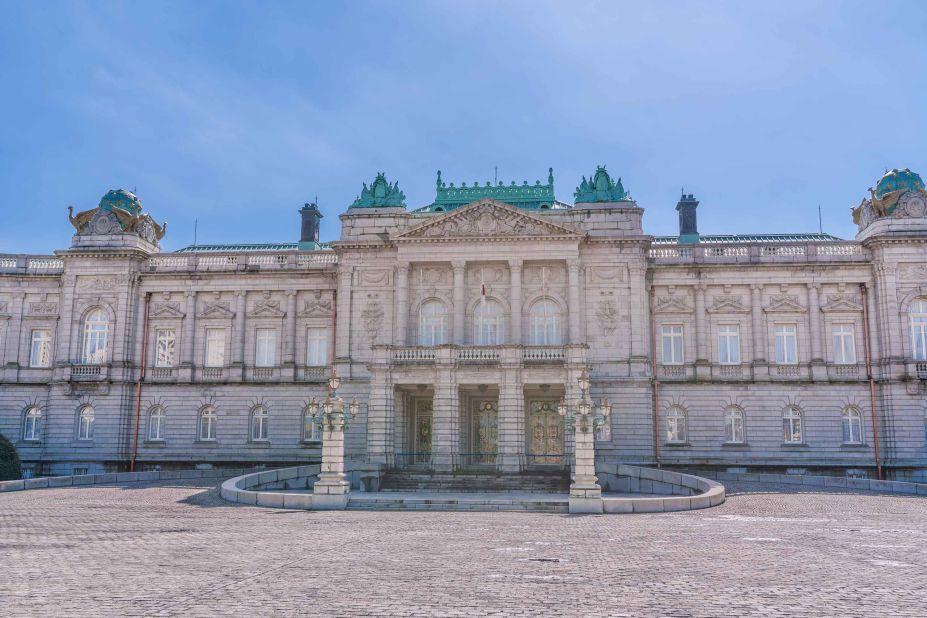
Akasaka Palace: Also known as the State Guest House, Tokyo's Akasaka Palace is a stunning, neo-Baroque building that's used to welcome visiting diplomats and royalty. Built in 1909, it's open to public tours as well. Click on for more Tokyo scenes and attractions.
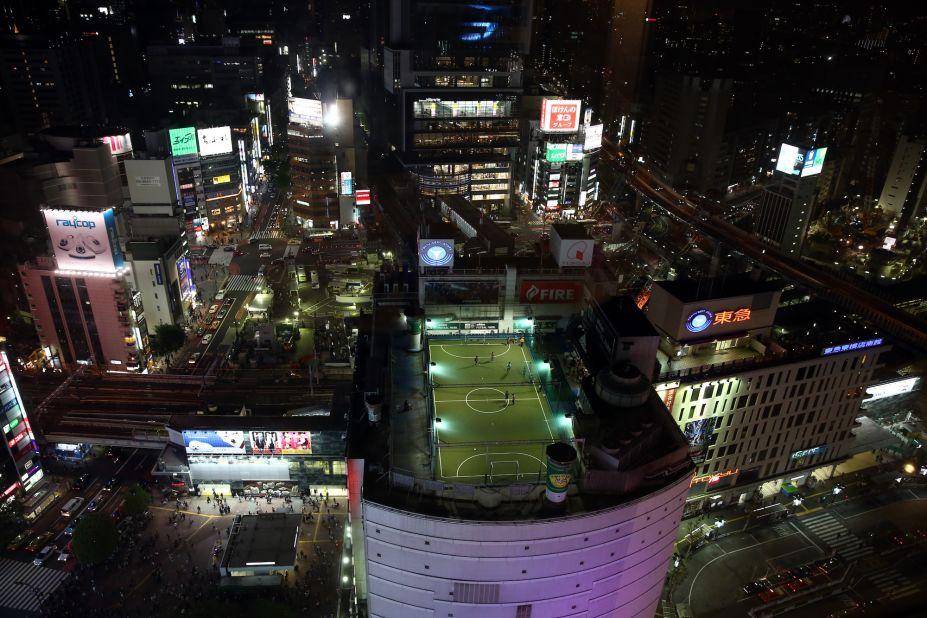
Urban Football: Adidas Futsal Park isn't merely a spot to lace up your cleats. This is breathtaking soccer atop a department store in the heart of Shibuya, complemented by a panorama that never fails to amuse.
Regardless of the number of times you've set foot in Tokyo or lived therein, the city continues to unveil novel experiences.
After all, it reigns as the most densely populated urban sprawl globally. We sought wisdom from bloggers versed in culinary, fashion, cycling, music, and photography domains to grasp the genuine essence of Japan's largest city.
In the ensuing sections, these bloggers escort us through their preferred destinations while sharing useful tips to exploit the wonders that this magnificent city offers.
1. A Culinary Journey with Yukari Sakamoto: Food Sake Tokyo
Yukari Sakamoto, the creator and curator of "Food Sake Tokyo", has captivated a broad audience by consistently delivering updates on Tokyo's gastronomic shifts through her identically named blog. But what about gastronome novices in the city, overwhelmed by the idea of plunging into its vibrant food culture?
Sakamoto's advice? Start with department stores. These establishments, oddly enough, serve as an excellent primer to the local cuisine. Boasting a variety of culinary delights under one roof, these stores, Sakamoto says, usually have entire floors dedicated to restaurants, often displaying plastic replicas of their dishes externally.
"This set-up enables newcomers to simply point and order. The dining options housed in these department stores are of excellent quality, otherwise they wouldn't be featured there. This is much different than the massive food courts found in shopping centers around the globe," she adds.
Sakamoto highly recommends the Ginza Matsuya department store, which is nestled in one of Tokyo's most luxurious districts. Additionally, she encourages not to hesitate when considering the local dining venues.
"If the restaurant staff are inviting and encourage you to enter, don't hold back. However, if their demeanor isn’t welcoming, it's best to continue your journey elsewhere."
For a culinary journey across Japan, consider a visit to an 'antenna' shop.
In Japan, we have 47 prefectures, akin to the states in the US, and each one boasts a store in Tokyo where one can procure regional food specialties and unique artisan crafts native to that area,” she explains. An example is the Okinawa antenna shop, which is renowned for its extensive variety of awamori, a specific kind of distilled liquor.
Mastering the Basics of Japanese
Preparing yourself with a handful of essential Japanese vocabulary will greatly enhance your experience while exploring Tokyo. Prior to your journey, take some time to familiarize yourself with key phrases such as "arigato" for thank you, "oishii" for delicious, and "sumimasen" for excuse me.
If you're venturing out to dine in Tokyo, two important words to remember are "omakase" and "osusume." "Omakase" signifies leaving it up to the chef to serve their recommended dishes and is particularly well-suited for restaurants that offer a variety of small plates. On the other hand, "osusume" is useful for more casual dining establishments that serve set meals.
Lastly, once you've finished a delightful meal, express your enjoyment by telling them it was "oishii."
It's worth noting that eSun Japan provides a comprehensive guide to common Japanese phrases, perfect for beginners looking to grasp the essentials of the language. Additionally, Tokyo Weekender offers a variety of articles and resources to further immerse yourself in Tokyo's vibrant culture.
Insider Tips for Exploring Tokyo by Sakamoto
Embarking on your first trip to Japan can be an extraordinary experience, and according to Sakamoto, staying at a hotel can greatly enhance it. Tokyo, as the bustling capital, offers a variety of lodgings to suit any visitor's needs.
If you're planning on spending considerable time in Tokyo, Sakamoto recommends browsing http://www.tokyo-hotels-stay.com/en/ to find the accommodation that best suits your preferences and budget.
She suggests relying on the valuable assistance of a concierge for tasks such as securing restaurant reservations and navigating the intricate train system, ensuring a significantly better overall experience.
If you are a first-time visitor, here are a few additional tips to make your adventure in Tokyo more enjoyable:
While Wi-Fi may not be readily available, you can easily rent portable Wi-Fi units to stay connected while on the go.
It's important to note that the Japanese tend to dress formally, so it's advisable to inquire about a restaurant's dress code before dining out.
If you find yourself lost, try to appear lost, as the kind-hearted locals often come forward to offer assistance, even if they don't speak your language.
Unlike in many other countries, tipping is not customary in Japan.
Most importantly, Sakamoto emphasizes the significance of savoring every moment.
Japan provides an unparalleled experience that is certain to overwhelm you with its unique beauty and culture.
Consider bringing along a journal to jot down your experiences and noteworthy sights that capture your attention during your trip.
2. A Local Cyclist's Perspective: Byron Kidd of Tokyo by Bike
Meet Byron Kidd, the mind behind the Tokyo By Bike blog, a proficient cyclist and Tokyo resident for the last two decades.
"With each bike ride, you discover new perspectives and hidden gems in the city," he shares. "In my view, there's no better method to truly immerse yourself in Tokyo."
However, Kidd advises cyclists to stay mindful of the fact that Tokyo's city planning does not extensively cater for two-wheelers. "Anticipate a noticeable paucity of bike lanes and parking spaces," he warns.
Bicycling in Tokyo: Expert Recommendations
Unlike some other major cities worldwide, Tokyo hasn't yet implemented a standard bike-sharing system. However, several enterprises do cater to bicycle rentals. A comprehensive list of these services can be found on this blog, as compiled by Kidd.
While Kidd does not discourage first-timers from the exciting venture of bicycling in Tokyo, he imparts a few insights to consider.
To assure a seamless cycling experience around the foreign city, Kidd advises gaining a preliminary understanding of Tokyo's map. "Acquainting yourself with the primary urban hubs and their spatial relationships can ensure you'll never lose your way," he comments.
Planning a Tokyo trip? Here are some tips for railways and beyond
While the traffic may seem daunting, Kidd asserts that most drivers display a considerate and amicable demeanor. Their courteous behavior is potentially attributed to personal cycling experiences, as it equips them with an understanding of how cyclists respond and what they prefer. If you find the roads too intimidating, Kidd reassures that cycling on the sidewalks just like the locals is perfectly okay.
To the relief of many, it's worth noting that a large portion of street signs are presented in English.
There's a certain thrill in self-navigation, and even if you go astray, Kidd assures that strategically placed signs will guide you back to familiarity. Riding a bicycle through Tokyo, you'll understand how surprisingly compact the city is, allowing what once required subway travel to be transformed into walkable or cyclable distances.
If you yearn for a unique cycling adventure, Kidd suggests a tour of Suginami, as shown in the associated map. This intriguing journey encompasses a visit to Okinawa Town, several enticing cafés, sacred shrines, a temple, and the bustling Eifukucho Shopping Street.
3. Brian MacDuckston: The Ramen Aficionado
Brian MacDuckston stands out amongst the host of ramen lovers worldwide, thanks to his fervent passion for these Japanese noodles.
Since launching his blog, "Ramen Adventures" in 2008, he's penned close to 1,000 posts.
“Ramen is universal,” Brian believes. "It transcends societal barriers like wealth and age. It's truly a food for all, never exceeding $10 – 1000 yen".
Journeying through the myriad tastes of ramen has unfolded a unique facet of Japan for MacDuckston.
"Travel and ramen, for me, go hand in hand," he explains. "I've crisscrossed this country, discovering hundreds of ramen styles. It’s an antidote for solitude – visit a shop, make new acquaintances. It’s Japan’s answer to comfort food."
Guidelines for Ramen Exploration by MacDuckston
If you find yourself in a ramen shop equipped with a ticket machine, usually the button in the top-left corner indicates the restaurant's unique specialty.
Amazing ramen experiences are often found at places tucked away from the city's bustling mainstream stops - exploring these spots allows you to uncover the true essence of Tokyo, and by extension, Japan.
In support of this claim, MacDuckston guides us through an extraordinary ramen adventure, introducing us to a distinctive ramen variant - the shio tsukemen. This culinary journey takes place at a cozy eatery, Toka, located in the Yotsuya area of Tokyo, a stone's throw away from Shinjuku.
Shio translates to salt, and tsukemen refers to noodles that are served separately from the soup, intended for dipping. This dish tests the acumen of a proficient ramen chef, who must create an appealing dish using just salt as the main seasoning.
Enthusiasts often say that, if a chef can perfect shio ramen, they've truly mastered their craft," shares MacDuckston.
4. Feature: Lee Chapman of TokyoTimes.org
Lee Chapman, a Tokyo local since 1998, continues to call the metropolis his home.
An avid fan of photography, Chapman admits, “My free time is often spent behind the lens.”
He's witnessed Tokyo's dynamic transformation over the years, consistently sharing this evolution on his online photo journal, TokyoTimes.org.
The city's remarkable progression, particularly in its older, often overlooked areas, is a noted focus of his photography.
Tokyo's ever-evolving landscape presents a fascinating dichotomy - as modern skyscrapers like the Skytree tower dominate the skyline, the city's older neighborhoods quietly preserve their unique charm and character.
One such neighborhood, Hikifune, has caught the attention of bloggers and enthusiasts like never before. Overlooked for years, this hidden gem has become a sought-after destination for those seeking an authentic Tokyo experience.
The area's transformation since the construction of Skytree in 2011 is undeniable. New developments have sprung up, while some beloved shops have vanished. However, amidst the change, the old houses and the people who care for them remain, serving as a constant reminder of Tokyo's rich heritage.
With Skytree now visible from almost every corner of Hikifune, one can't help but ponder the delicate balance between progress and preservation. As an observer, I find myself drawn to these evolving neighborhoods, captivated by their stories and the ever-present possibility of change.
Tips from Chapman for Exploring Tokyo
Experience the charm of Tokyo's train system, but don't miss out on the opportunity to explore the city on foot. Walking allows you to fully immerse yourself in the vibrant surroundings and discover hidden gems.
As a photographer, Tokyo offers endless opportunities to capture intriguing moments. The city welcomes photographers with diverse subjects, and people are generally receptive and rarely take offense.
According to Chapman, Tokyo is a city of contrasts, with various parts that each have their own unique environments and atmospheres. Venturing into different neighborhoods allows for a deeper understanding and appreciation of the city's diversity.
Chapman's approach involves returning to familiar places, which enables him to make new acquaintances and encounter fresh sights. He suggests choosing a starting point and an endpoint within a particular area and simply wandering around, letting the city unfold before you.
An advantage for English-speaking tourists is the increasing availability of signs and notices in Tokyo, a trend that is expected to continue as the city prepares for the upcoming 2020 Olympics. Moreover, the locals, including shop and restaurant staff, are known for their helpfulness and willingness to assist, making language barriers less of a concern.
5. Melodee Morita, lifestyle vlogger
It’s impossible to lump YouTube lifestyle and beauty vlogger Melodee Morita’s videos into a single genre.
In one video you’ll see the bilingual Japanese American ballet dancer doing fitness routines for those looking to lose thigh fat, in the next she’s going shopping for kitchen utensils.
Though Morita lives in New York, she travels frequently to Tokyo.
Like food blogger Sakamoto, Morita says first-time visitors to Japan should really make an effort to learn a bit of basic Japanese, “because a lot of people in Japan become shy or intimidated when someone comes up to them and speak in English all of a sudden.”
Whether you're exploring Tokyo for the first time or have become a seasoned resident, having the right train station/subway apps can greatly enhance your travel experience. Two popular choices among locals and visitors alike are Navitime and Tokyo Subway Navigation for Tourists.
In fact, these apps are so helpful that even long-time residents like myself, who might not be familiar with every nook and cranny of Tokyo, rely on them extensively during our visits. The apps not only provide various route options, but also offer suggestions based on factors such as the most affordable fares, minimizing transfers, and travel time optimization.
An interesting aspect to note is that these apps are widely used by both locals and tourists in Japan. They have become an integral part of navigating Tokyo's extensive train and subway system. From finding your way to popular attractions to discovering hidden gems off the beaten path, these apps provide invaluable insights and guidance.
Morita’s Tokyo favorites
Though Morita grew up in LA and New York, it wasn’t long before she fell in love with Japan’s style.
“Up until high school, I used to be a very ‘SoCal’ girl wearing a simple shirt, shorts and flip flops. But ever since I made my first visit to Shibuya at the age of 17, my style greatly changed.
“I still visit Shibuya/Harajuku every year for fashion and lifestyle inspiration because everything is very fast-paced and trendy there.
“I don’t cover myself up in trendy fashion from head to toe, but I love to be inspired by the latest styles and incorporate certain pieces into my outfits to enjoy fashion that evolves over the years. Now that I’m in my 20s, I like shopping around Ebisu too because it has a more sophisticated vibe with hidden shops.
Among the cherished locations in Tokyo that she's fond of is the wildly eccentric Kawaii Monster Cafe located in Harajuku, a sight that must be experienced to fully grasp its charm. (Thankfully, we offer a glimpse of it through a video. Please do have a look at the video above.)
"Kawaii" interprets to "cute" in the Japanese language and it's not just limited to the overly feminine aspect," she mentions. "It can also flaunt an edgy look."
Another strong interest of Morita lies in nail care. However, it isn't about a generic manicure or pedicure. The nail salons in Tokyo are a canvas for miniature works of art, adorned with daring designs and even tiny precious stones.
"When I visited Tokyo for the first time, I decided to get my nails done. Japanese dramas and movies had a big influence on me... I was enamored by their remarkable sense of style – and this included their nails."
One of the premier destinations to get standout nail treatments is Joli Nails, situated in Tokyo’s upscale district of Roppongi. The owner proudly states that one of their nail stylists achieved the top spot in the previous year's Nail Pro Cup event hosted in Las Vegas.
6. Yulia, The Connoisseur of Design and Music
Embark on an adventure through Tokyo's untamed side with your guide, the distinguished Mademoiselle Yulia. Raised in the heart of Harajuku, this extraordinary fashion designer and DJ has observed the evolution of the renowned district over the years.
Yulia describes Harajuku as a mecca for style enthusiasts. "This avenue boasts an abundance of second-hand stores," she remarks.
A tour of Tokyo's multifaceted shopping districts: Discover the top-rated shotengai
If vintage collectibles are your passion, Yulia suggests a visit to Harajuku's Spiral.
She shares, "Barbie dolls have been part of my collection for probably over two decades now. My assemblage surpasses 300. To me, Barbie represents the pinnacle of fashion. My apparel designs derive considerable inspiration from her. In my opinion, fashion is a critical means of self-expression."
According to a resident blogger, Harajuku's vintage clothing scene is experiencing a decline due to the increasing presence of large department stores in the area. Despite this change, she highly recommends a visit to Nude Trump, a popular vintage store located in Shibuya.
Japanese people embrace individuality and personal style when it comes to fashion, often disregarding mainstream trends. This allows them to find and express their unique fashion identity.
Experience Karaoke like never before
When it comes to exploring Tokyo, karaoke is an essential part of the experience. One unique spot worth visiting is Rainbow Karaoke in Shibuya, recommended by local blogger, Yulia. What sets this place apart is the addition of instruments to enhance your performance for an unforgettable night.
“Karaoke is a beloved pastime for many Japanese people, myself included," Yulia shares enthusiastically. "It provides a liberating platform where you can sing your heart out without any judgement or stress. Personally, I'm usually quite shy, but when I step into a karaoke booth, that shyness disappears, allowing me to freely express myself and connect with others."
Whether you're a talented vocalist or simply enjoy belting out your favorite tunes, Rainbow Karaoke is the perfect destination to immerse yourself in Tokyo's vibrant music culture. So grab a microphone, embrace the energetic atmosphere, and let the music be your language of communication.